What it is
The Self-Trust Workbook is a self-guided journey through the core patterns behind people pleasing and self-abandonment — fawning, guilt, boundary avoidance, and the quiet habit of leaving yourself to keep everyone else okay.
Every set of reflection prompts opens with a short teaching passage, so you're never handed a question without the context to actually answer it. No course required. No background reading. Just open it and start.
Inside, you'll work through:
Why people pleasing develops, and why it was never a character flaw
How to recognize activation in your body before you abandon yourself
The difference between guilt and an actual moral signal
How to set a boundary without over-explaining, apologizing, or negotiating it away
How to stay connected to someone else without losing yourself in the process
Who it's for
Anyone who's tired of being "the easy one." Anyone who's noticed they can't answer "what do you want?" without first checking how everyone else feels about it. Anyone curious about this work but not ready — or not needing — to commit to a full course.
Why it's different from just journaling prompts
Prompts without context can feel like a test you don't have the answer key for. This workbook gives you the framework first — drawn from the same clinical material used in Kathryn's full course — condensed into a page or two of grounded, non-clinical language before every set of questions. It's built to be used alone, at your own pace, without a therapist or a class.
What's inside
51 pages, organized into 7 sections
A short framing passage before every set of prompts
Guided reflection questions with space to write your answers
Three built-in exercises for practicing boundary language and noticing your own patterns in real time
Educational content, not a replacement for therapy — written by a licensed marriage and family therapist
If this workbook resonates and you find yourself wanting more — deeper teaching, guided exercises, and the full arc from understanding the pattern to practicing something different — the complete course, From People Pleasing to Self-Trust, goes further into all of it.
What it is
The Self-Trust Workbook is a self-guided journey through the core patterns behind people pleasing and self-abandonment — fawning, guilt, boundary avoidance, and the quiet habit of leaving yourself to keep everyone else okay.
Every set of reflection prompts opens with a short teaching passage, so you're never handed a question without the context to actually answer it. No course required. No background reading. Just open it and start.
Inside, you'll work through:
Why people pleasing develops, and why it was never a character flaw
How to recognize activation in your body before you abandon yourself
The difference between guilt and an actual moral signal
How to set a boundary without over-explaining, apologizing, or negotiating it away
How to stay connected to someone else without losing yourself in the process
Who it's for
Anyone who's tired of being "the easy one." Anyone who's noticed they can't answer "what do you want?" without first checking how everyone else feels about it. Anyone curious about this work but not ready — or not needing — to commit to a full course.
Why it's different from just journaling prompts
Prompts without context can feel like a test you don't have the answer key for. This workbook gives you the framework first — drawn from the same clinical material used in Kathryn's full course — condensed into a page or two of grounded, non-clinical language before every set of questions. It's built to be used alone, at your own pace, without a therapist or a class.
What's inside
51 pages, organized into 7 sections
A short framing passage before every set of prompts
Guided reflection questions with space to write your answers
Three built-in exercises for practicing boundary language and noticing your own patterns in real time
Educational content, not a replacement for therapy — written by a licensed marriage and family therapist
If this workbook resonates and you find yourself wanting more — deeper teaching, guided exercises, and the full arc from understanding the pattern to practicing something different — the complete course, From People Pleasing to Self-Trust, goes further into all of it.


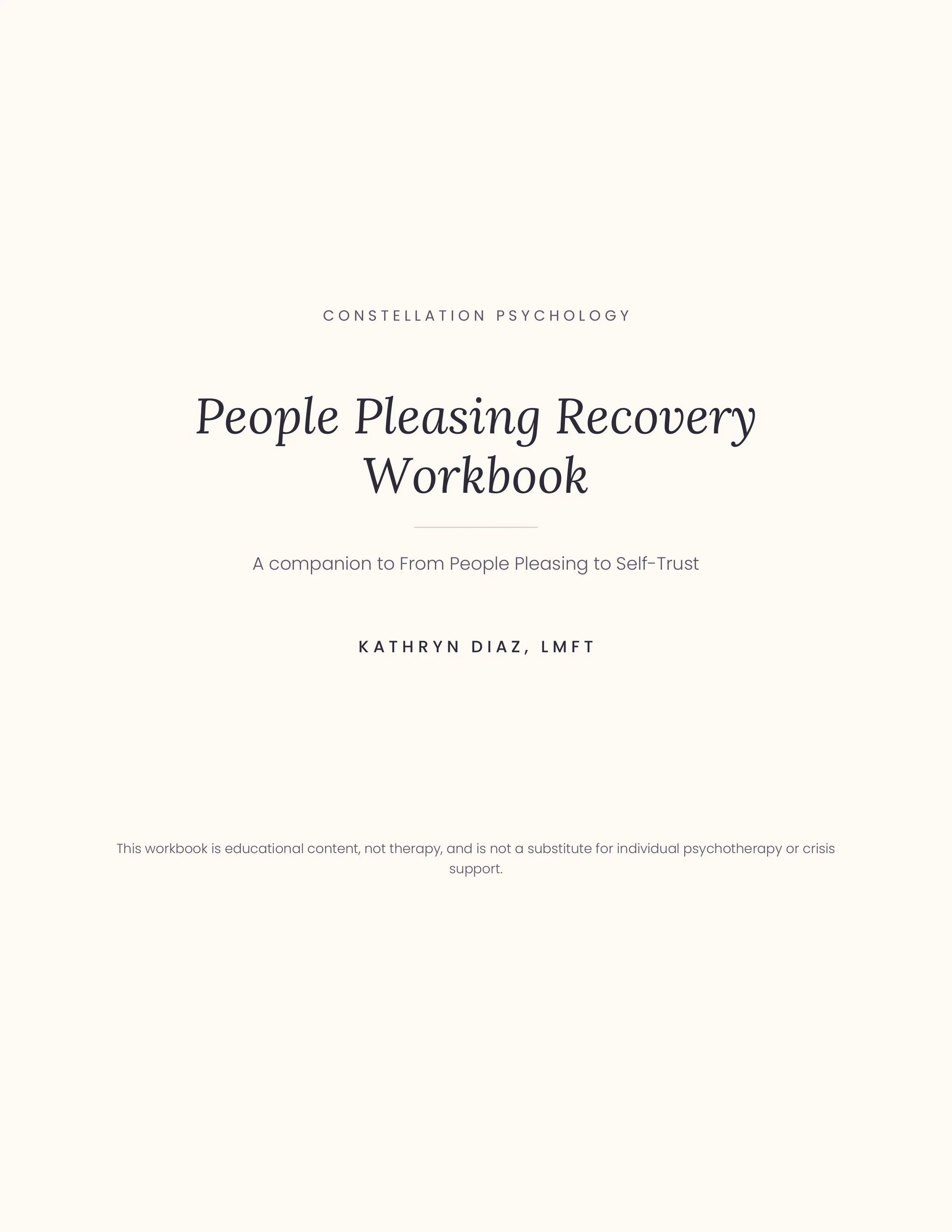 Image 1 of 1